Turning Sargassum data into action at 2026 AAORIA’s Ocean Hackathon
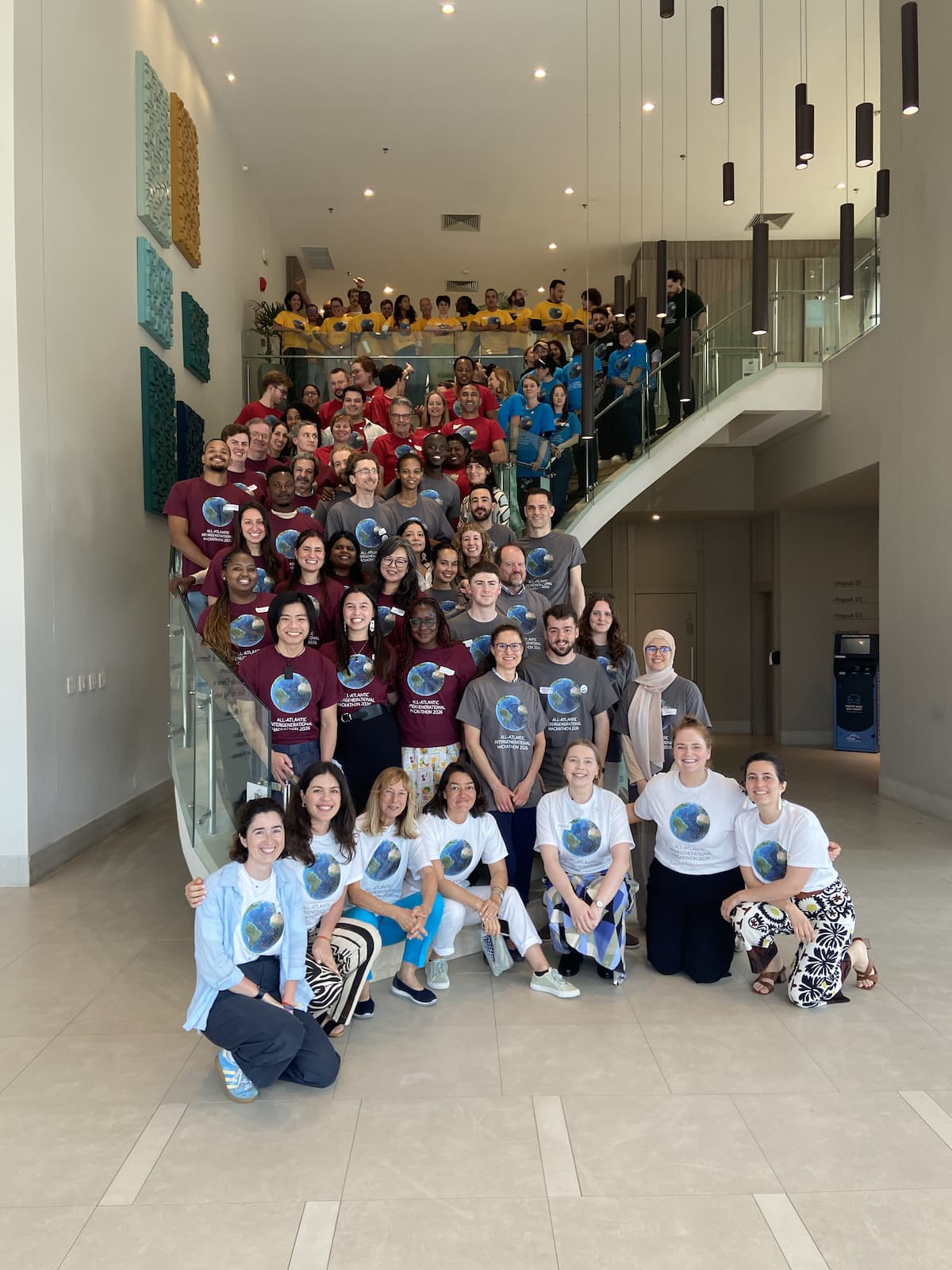
Ever dreamed of a Hackathon with people from all over the world? Experts on Sargassum and beginners on the topic, youth representative and more experienced advanced career facilitators? The Sargassum inundations in the Caribbean, West African coasts and all the Atlantic Belt are a challenge for communities. But communicating, sharing and disseminating data that can help manage this crisis is an all-other challenge. So we did it! We co-organized a challenge in the Intergenerational Hackathon of the All-Atlantic Ocean and Research Innovation Alliance Forum in Brazil, last April.
As Earth observation capabilities continue to improve, access to information about Sargassum is also growing. New monitoring products and forecasting tools are helping scientists track blooms and better understand their movement. Yet for many of the people most affected by Sargassum, accessing and interpreting this information remains a challenge.
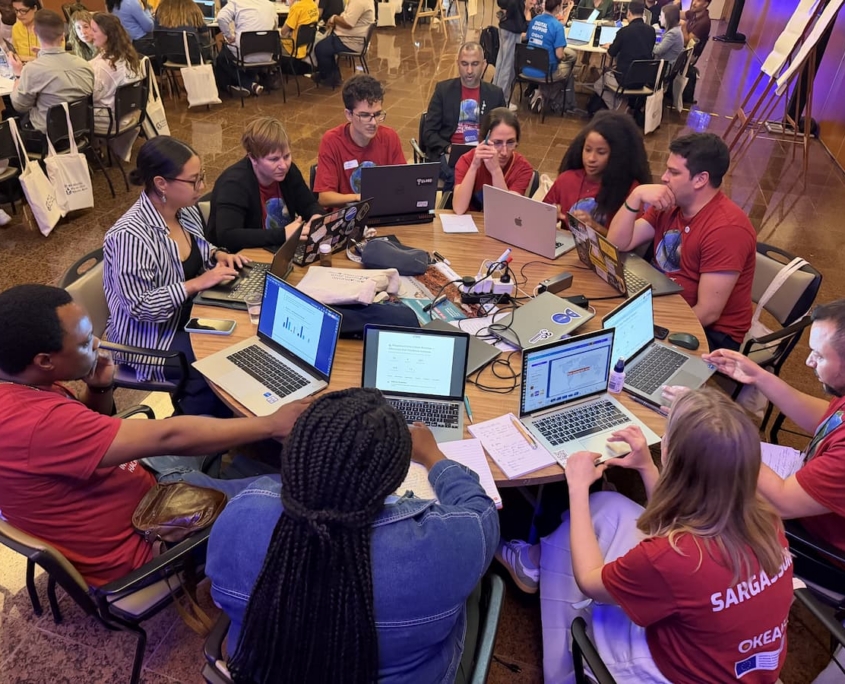
Participants in the Sargassum Challenge spent an intense 24-hours working on how Sargassum blooms information could be communicated through the Sargassum Information Hub to policy- and decision-makers.
The Sargassum Challenge group: the SAR’GO Team
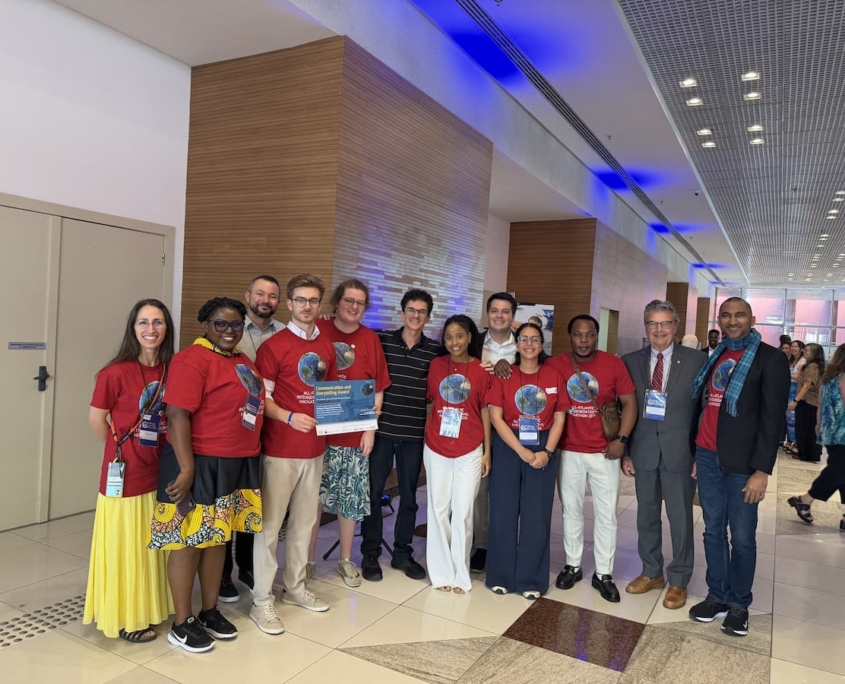
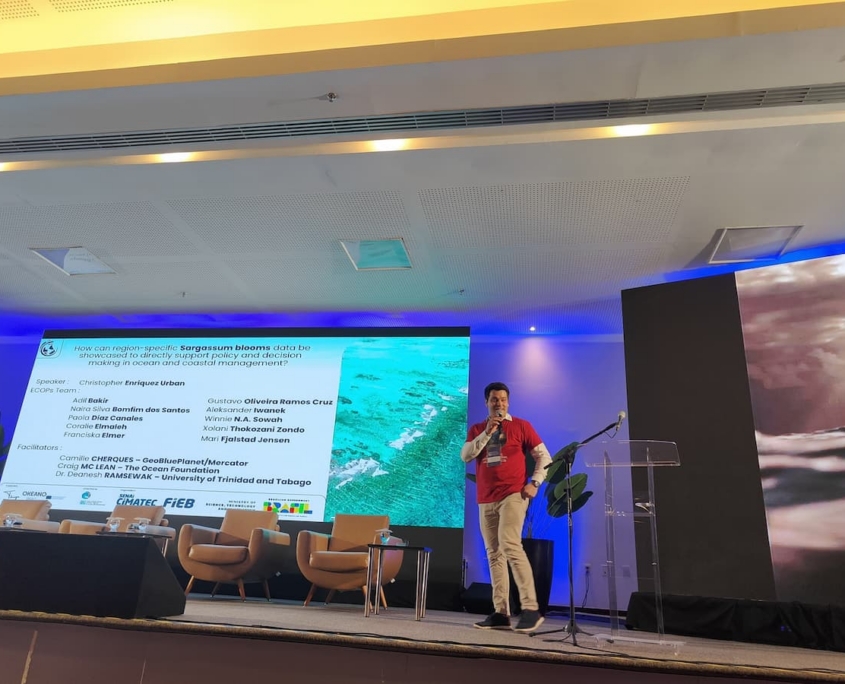
The team brought together Adil Bakir, Naira Bomfim dos Santos, Paola Diaz Canales, Coralie Elmaleh, Franziska Elmer, Mari Jensen, Aleksander Iwanek, Winnie Sowah, Xolani Thokozani Zondo, Gustavo Oliveira Ramos Cruz, and Christopher Enriquez Urban. All are Early Career Ocean Professionals and more experienced experts, but each has a different regional background and expertise for instance on marine biodiversity, data analysis, AI, remote sensing or oceanography They formed a united group, worked with high motivation and delivered quickly with creativity, dynamism and enthusiasm.
Three of them – Franziska Elmer, Paola Diaz Canales, and Winnie Sowah – were supported by GEO Blue Planet to attend AAORIA’s Forum and contribute to this challenge, with funding from EU4OceanObs project.
The team worked with facilitators Craig McLean, formerly of NOAA, and Dr Deanesh Ramsewak from the University of Trinidad and Tobago, with Camille Cherques from Mercator Ocean International/GEO Blue Planet as challenge coordinator.
“A team of Sargassum experts and a variety of others who aren’t really knowledgeable in Sargassum, but are knowledgeable in developing web applications and the like, came together, and really it was awesome working with such a diverse group…it just brought everything together,” says Winnie Sowah.
What users need
The Sargassum Information Hub, managed by GEO Blue Planet, is a central resource for Sargassum information, monitoring resources, and regional content. The challenge invited participants to build on this work by developing a prototype communication tool that could help different users access Copernicus Marine Service data and information relevant to them more easily.
A core part of the process was understanding who needs this information and how they use it. Ahead of the hackathon, the team gathered feedback in a survey that got more than 100 answers. The results showed that users were looking for more localised, practical, and accessible information. Some needed information in their own language, while others preferred updates through formats such as email or WhatsApp.
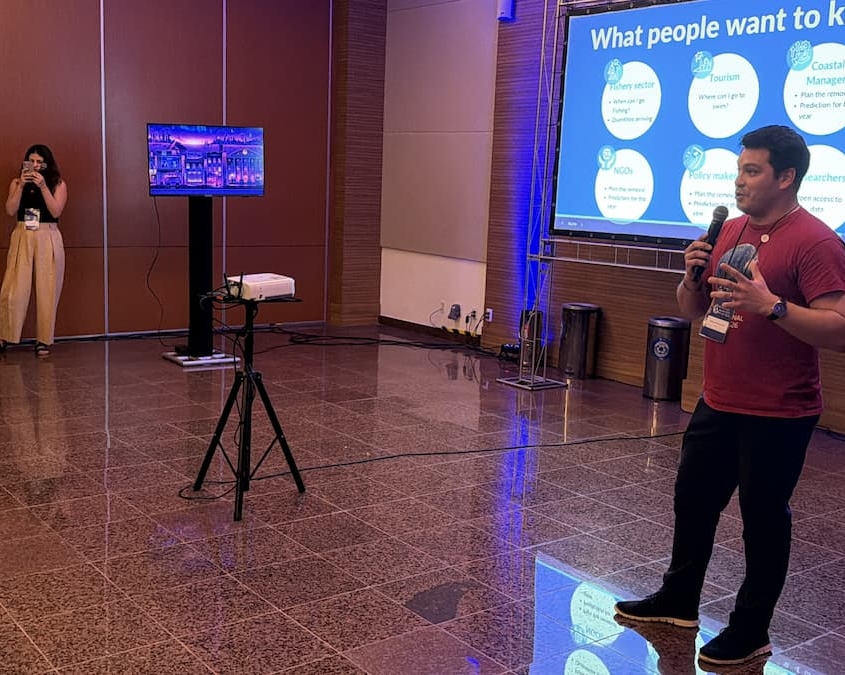
Different users also needed different answers. Fishers wanted to know when and where they could fish. Tourism operators needed information on beach conditions. Coastal managers needed information to plan clean-up activities, while policymakers needed accessible evidence to support decisions and resource allocation. The team analysed the survey results, which then fed the brainstorming around a solution and the building of the prototype.
The SARG’COMM solution
The solution the team came up with was SARG’COMM – short for Sargassum Communication and Community. “[It’s a] communication product to help people get the information they need on Sargassum in a format that they understand and that they are comfortable with,” explains Franziska Elmer.
The idea is that SARG’COMM would guide on our Hub’s Regional Pages people towards what they need based on their location, role, language, and level of knowledge, technical or more general. The prototype included an AI assistant called Sargy to help users navigate the available resources.
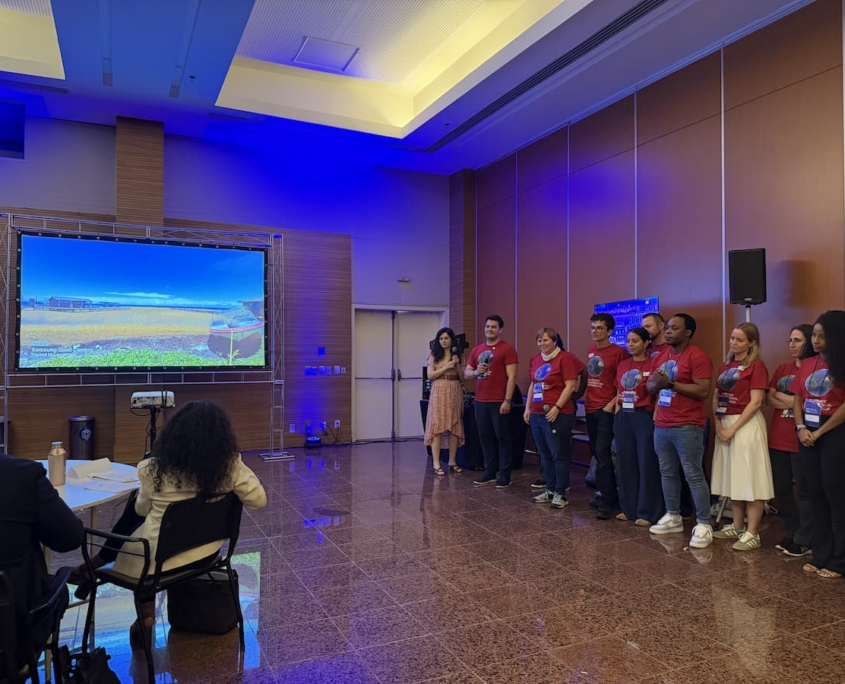
The team presented its 7-min pitch in front of the Jury, composed of Andrea Latgé (Secretary for Strategic Policies and Programmes at the Brazilian Ministry of Science, Technology and Innovation – MCTI), Justin Munyaneza (Director/Office of International Science, Partnership and Collaboration, Fisheries and Ocean, DFO, Canada), James Morrison (Director Healthy Planet, Directorate General for Research and Innovation at the European Union), Imraan Patel (Deputy Director General, Department of Science, Technology and Innovation DSTI in South Africa), Anjali Goswami (Chief Science Advisor and Director General for Science, Data and Analysis, Department for Environment, Food and Rural Affairs – DEFRA United Kingdom), a SENAI/CiMATEC representative: Luiz Fernando Taboada Gomes Amaral (SENAI/CIMATEC Representative), and Mariana Andrade (ECOP Representative).The criteria were based on storytelling & presentation, feasibility & scalability, technical implementation, creativity and innovation, science relevance and impact.
Credit: AAORIA 2026
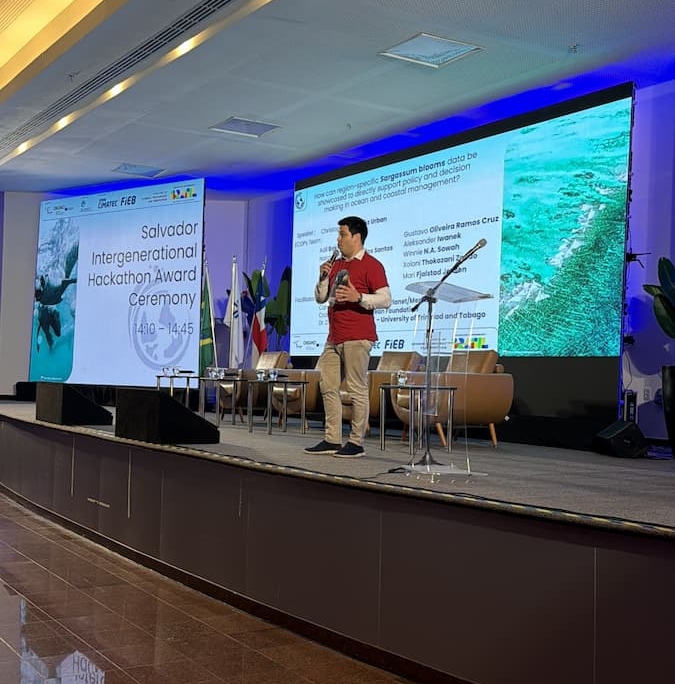
The SAR’GO Team started their pitch by bringing the whole team on stage like tourists going to a paradisiacal Caribbean beach, how we usually – in a biased way – picture this area of the world. Then theatrically, most of members fled the scene when a picture of a beach covered in Sargassum appeared. They covered their eyes and noses, imitating the irritating smell of gases. 2 representatives’ speakers of the group, Franziska Elmer and Christopher Emilio Enriquez Urban, started to explain what happened: why Sargassum, when decomposing, can cause health issues. Their pitch showed what are socio-economic problems with these algae floods and how better monitoring, collection and valorisation can help, but mostly how information targeted to right users and widely shared through right tools and channels is essential. They showed concrete examples of what can be done, like concrete blocks made of Sargassum which can help build constructions. This was particularly visual and impactful for the Jury members. Their pitch ended with a presentation of SAR’COMM and their prototyped solution.
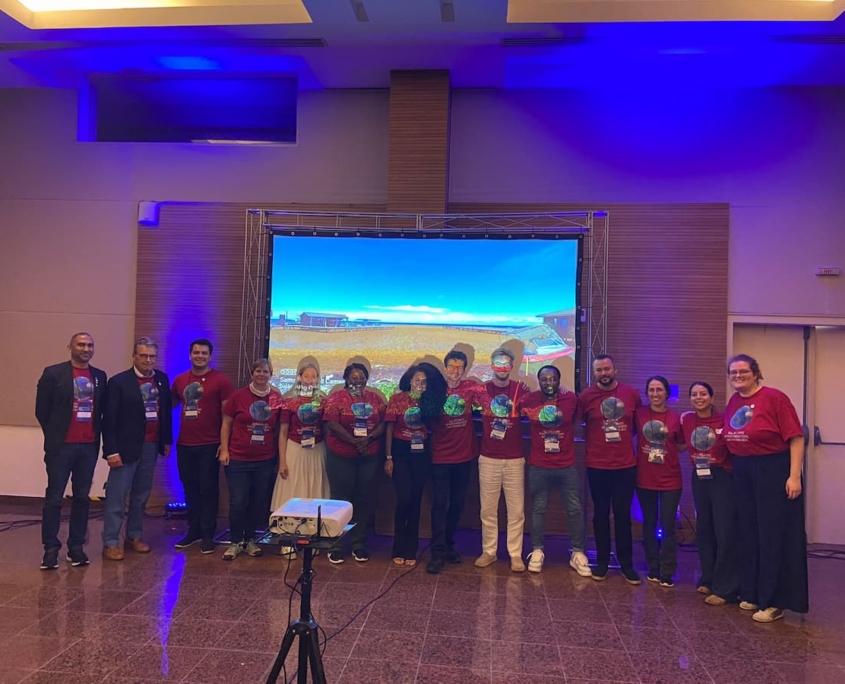
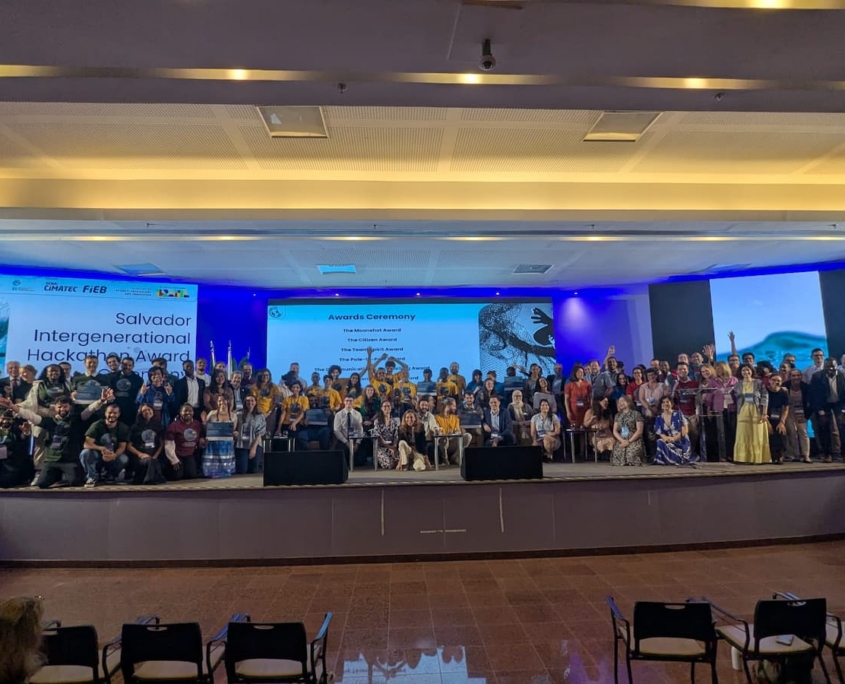
2 days later, at the end of AAORIA’s Forum in plenary, the team presented a reduced 2 minutes version of their pitch. The SAR’GO Team won the Communication & Storytelling Award, congratulations!
“These early career professionals wound up with a very imaginative solution. We gave them guidance, it was their smarts, it was their ideas, and their familiarity with current technology,” says Craig Mclean, one of the facilitators.
Stay tuned for more news to come!
Thank you to all the partners and organizers who made this challenge possible: OKEANO, IFREMER, SENAI/CiMATEC, MCTI, EU4OceanObs, Mercator Ocean International, GEO Blue Planet and IOCaribe.
We want to especially thank Gwenn Taburet and Florence Coroner from IFREMER and Sigi Gruber for all the organization, the facilitators and all ECOPs involved in this challenge.
Credit: AAORIA 2026
Credit: AAORIA 2026