Viewers and Bulletins
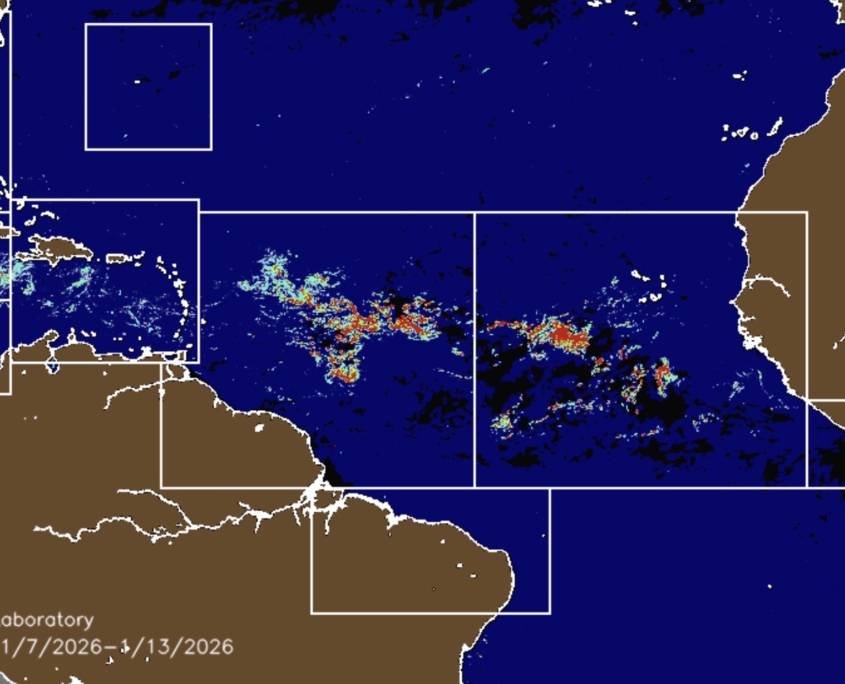
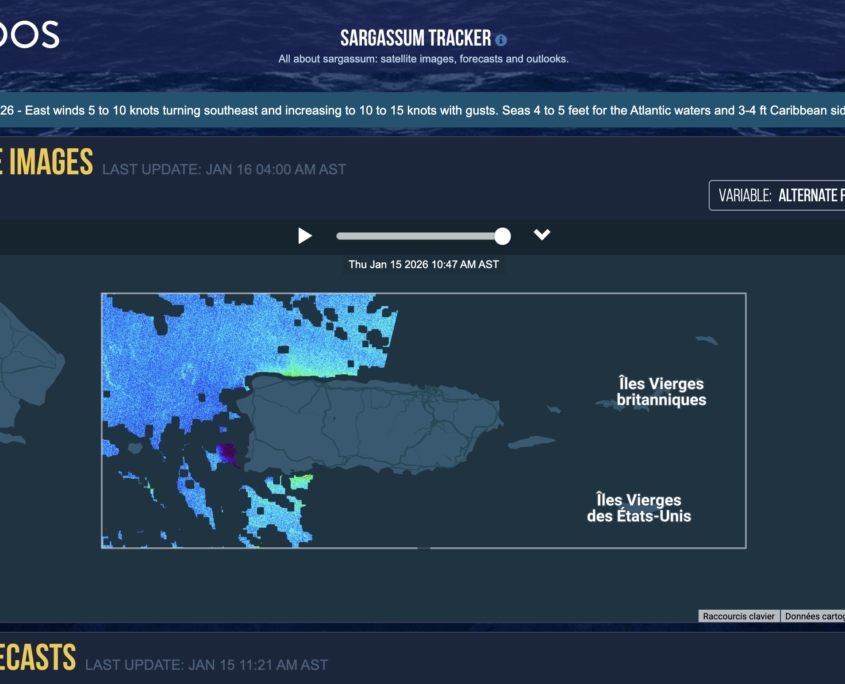
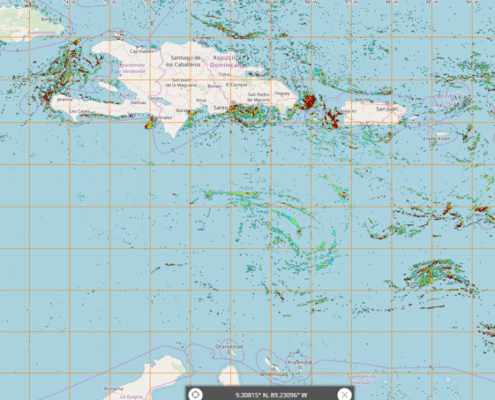
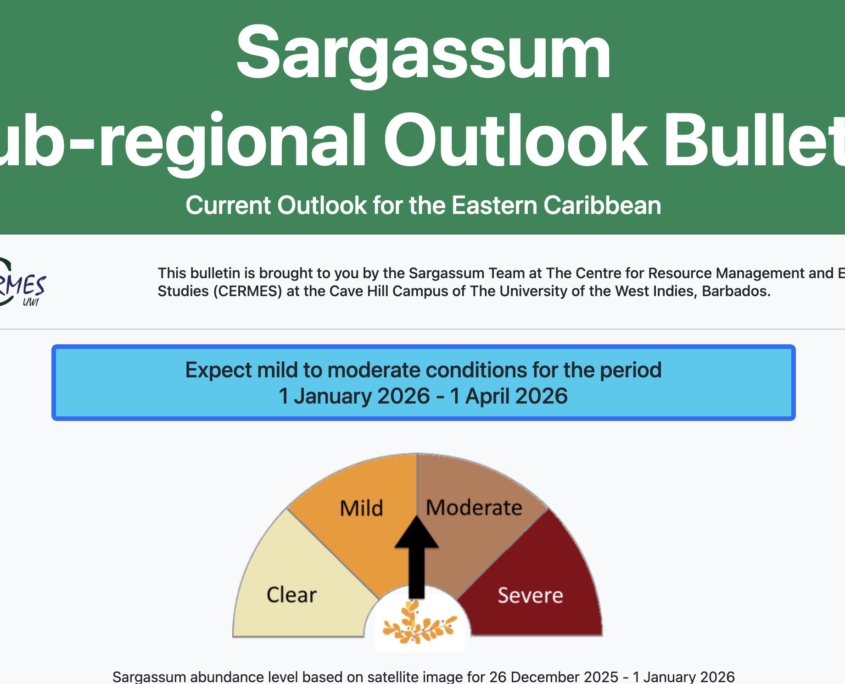
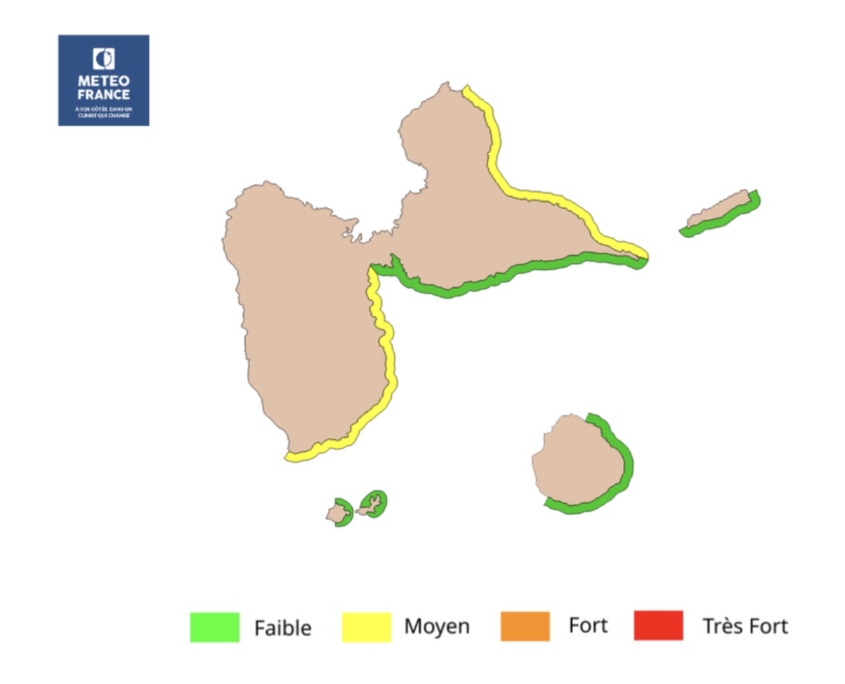
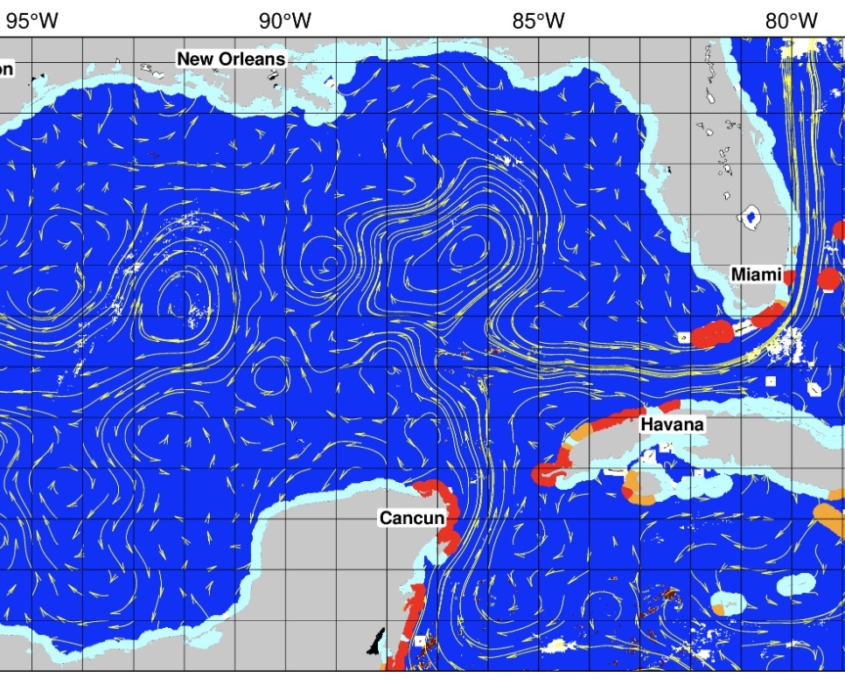
Monitoring and forecasting Sargassum rely heavily on satellite observations, which allow scientists to detect surface accumulations and track their movement across the Atlantic. Modern sensors can identify Sargassum by its spectral signature and estimate its biomass over broad regions, providing monthly to weekly updates that support regional alerts.
Looking forward in time with short term predictions (up to 2-3 days approx.), not only the satellite observation of sargassum is needed but also fine scale representations of currents, tides, waves and wind to estimate how and where sargassum mat are pushed around. Yet satellites measurements are disturbed by clouds, cannot detect deeply submerged mats, or resolve small patches near the coast, which limits their capacity for short-term local predictions.
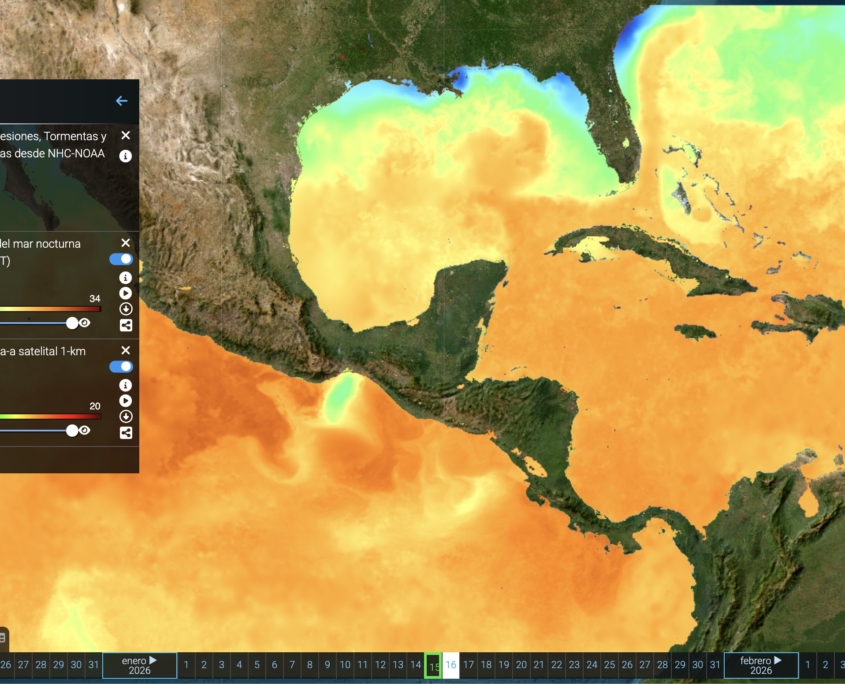
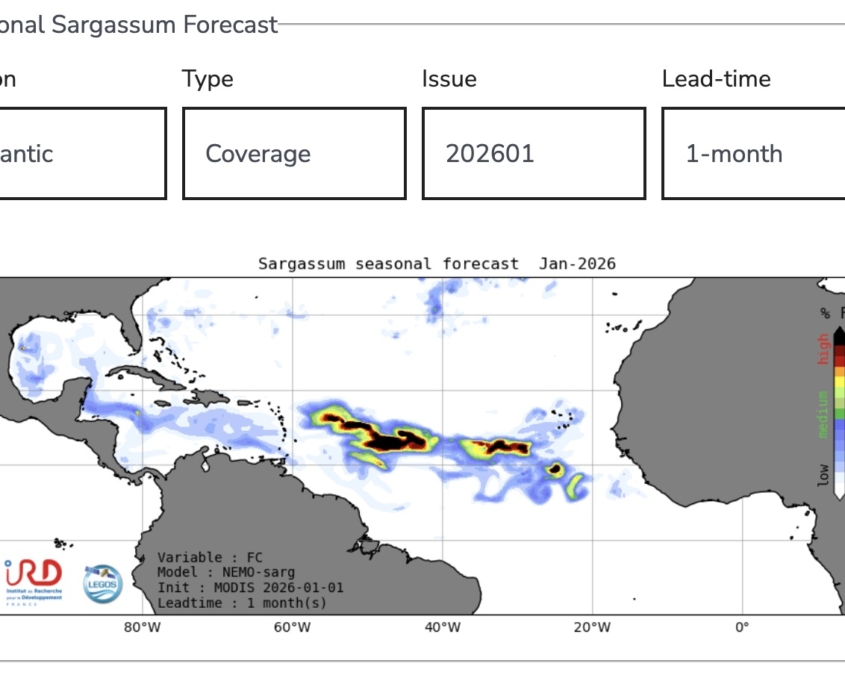
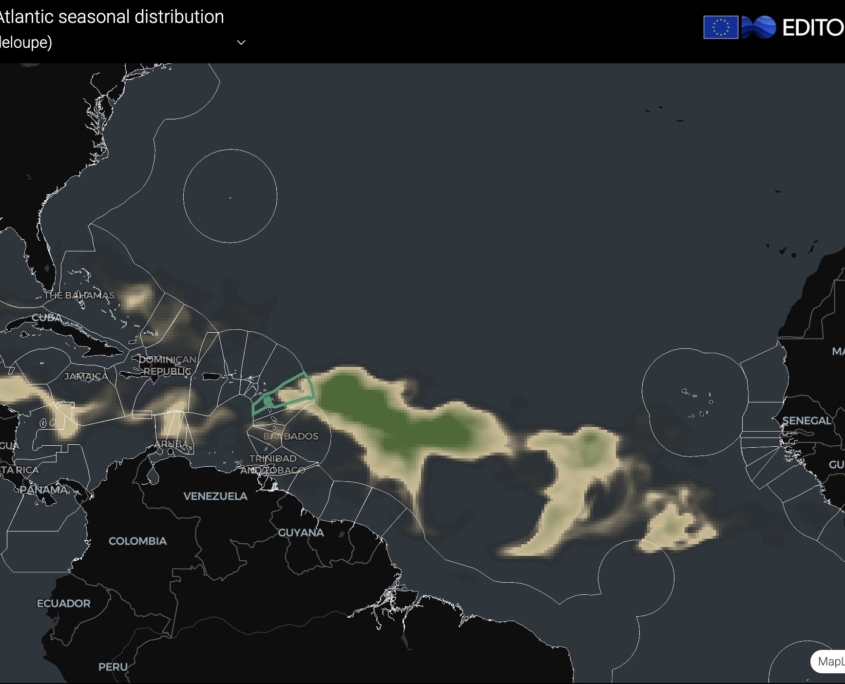
Numerical models are also used to offer tools to support short term to seasonal predictions.
As Sargassum approaches shore, its behavior becomes increasingly influenced by fine-scale winds, tides, waves, and coastal currents—processes that act at spatial scales too small for most satellites or basin-scale models to capture. To bridge this gap, forecasting systems are beginning to combine satellite data with high-resolution ocean models, particle-tracking simulations, and biological growth estimates that account for changing temperature, nutrients, and light. Ensemble methods and machine-learning approaches are also being tested to better predict strandings and provide early warnings. Despite these advances, substantial work is still needed to improve forecasting accuracy, especially in the final kilometers before landfall, where even small environmental changes can determine whether Sargassum reaches the shoreline or disperses offshore.